

Quantity breaks, mix-and-match sets, BOGO, free-gift offers and a Build Your Own Box builder. Discounts apply automatically at checkout through Shopify’s own engine — no codes for anyone to find, and no collisions with your other promotions.
Merchants running Oxify apps


Most stores have exactly one price per product and then wonder why the average order is one item. Buying three is not more attractive than buying one unless you make it so — and the tools Shopify gives you natively are a discount code and hope.
Bundling is not one tactic. These five cover almost every catalogue, and they all run from the same install.
Buy 2 save 10%, buy 3 save 15%. The simplest lever and usually the first one to try.
The customer assembles a set from a collection at a fixed price or tier.
Buy X get Y, applied automatically with no code to distribute.
Curated sets priced as one thing, without duplicate SKUs.
Show the ladder on the product page and the discount applies the moment the quantity qualifies. No code, no cart maths, and the next tier is always visible as a concrete target rather than fine print.
Start here: quantity breaks are the least work and the most reliable lift of the five.
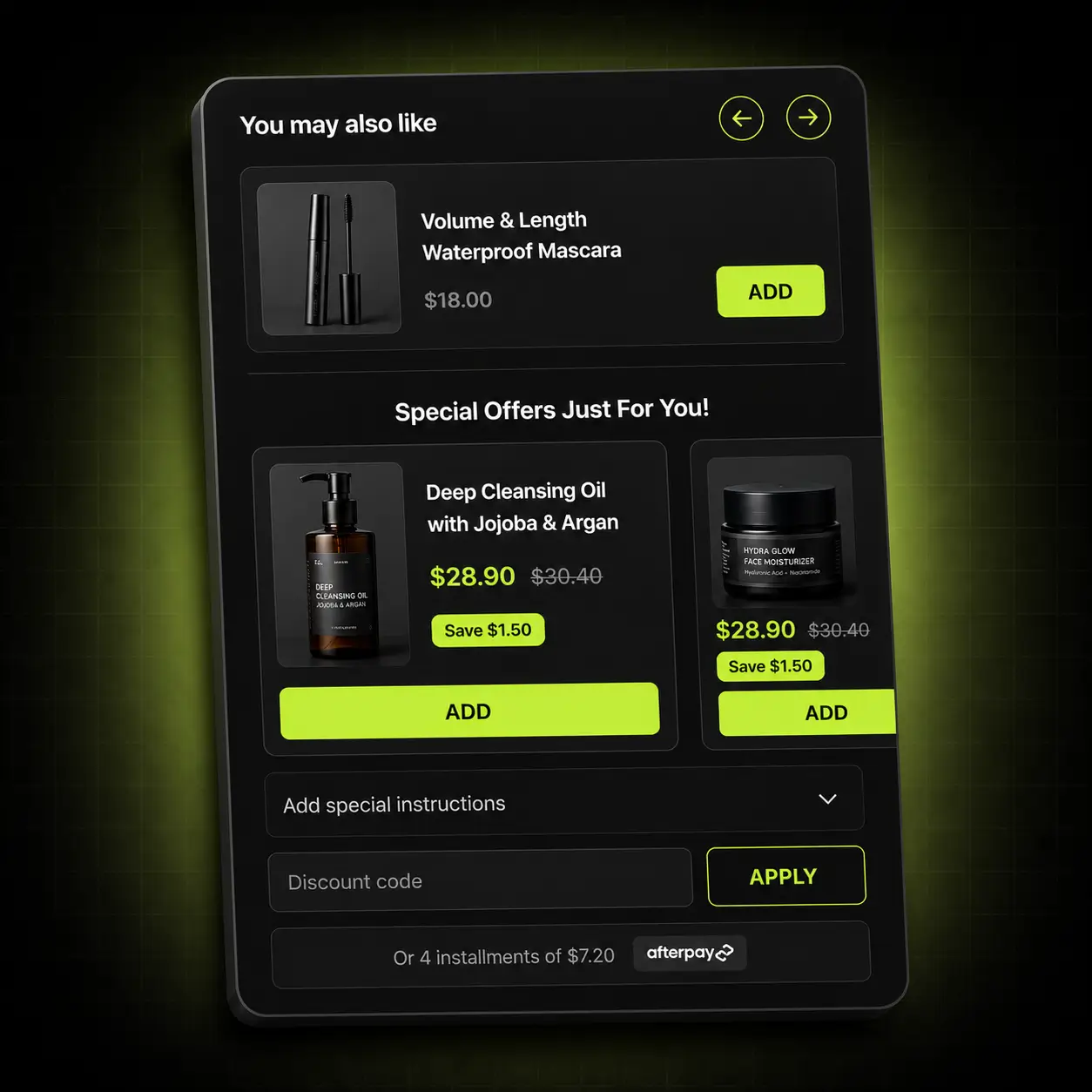
Pick any 6 from this collection for $45. A BYOB builder converts far better than a fixed gift set for one reason: nobody has to accept an item they don’t want in order to get the ones they do.
Why it beats a fixed set: the objection to a gift set is always the one item they didn’t want.
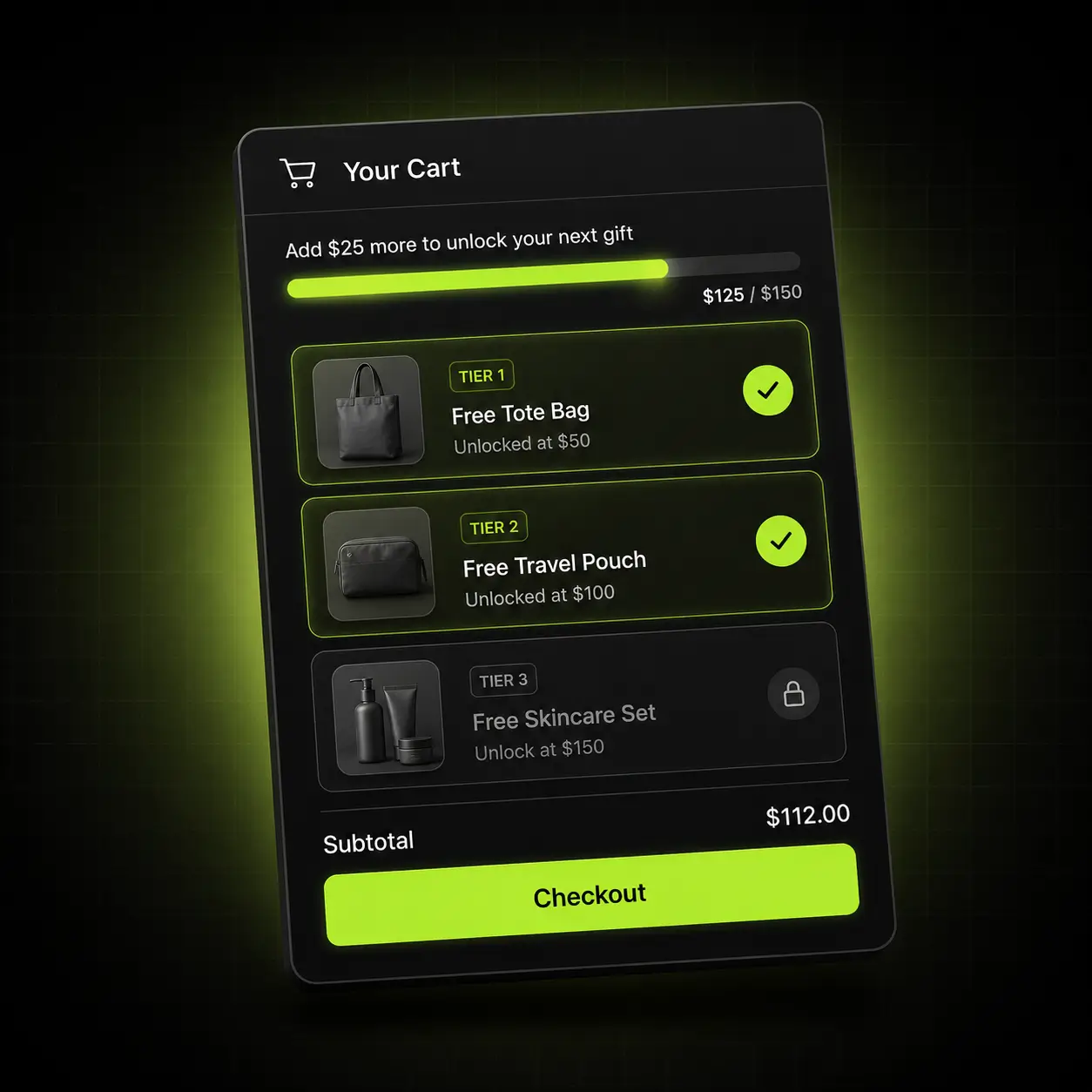
BOGO applied automatically at checkout, and free-gift offers that add themselves when the condition is met. Because it runs through Shopify’s native discount engine, your campaign codes keep working alongside it.
No leaked codes: automatic discounts cannot end up on a coupon site.
Bundling is guesswork until you measure it. Run two offers against each other, read the revenue per bundle rather than the click-through, and keep the one that moved the number.
The part most free apps skip: without revenue attribution you are guessing which bundle works.
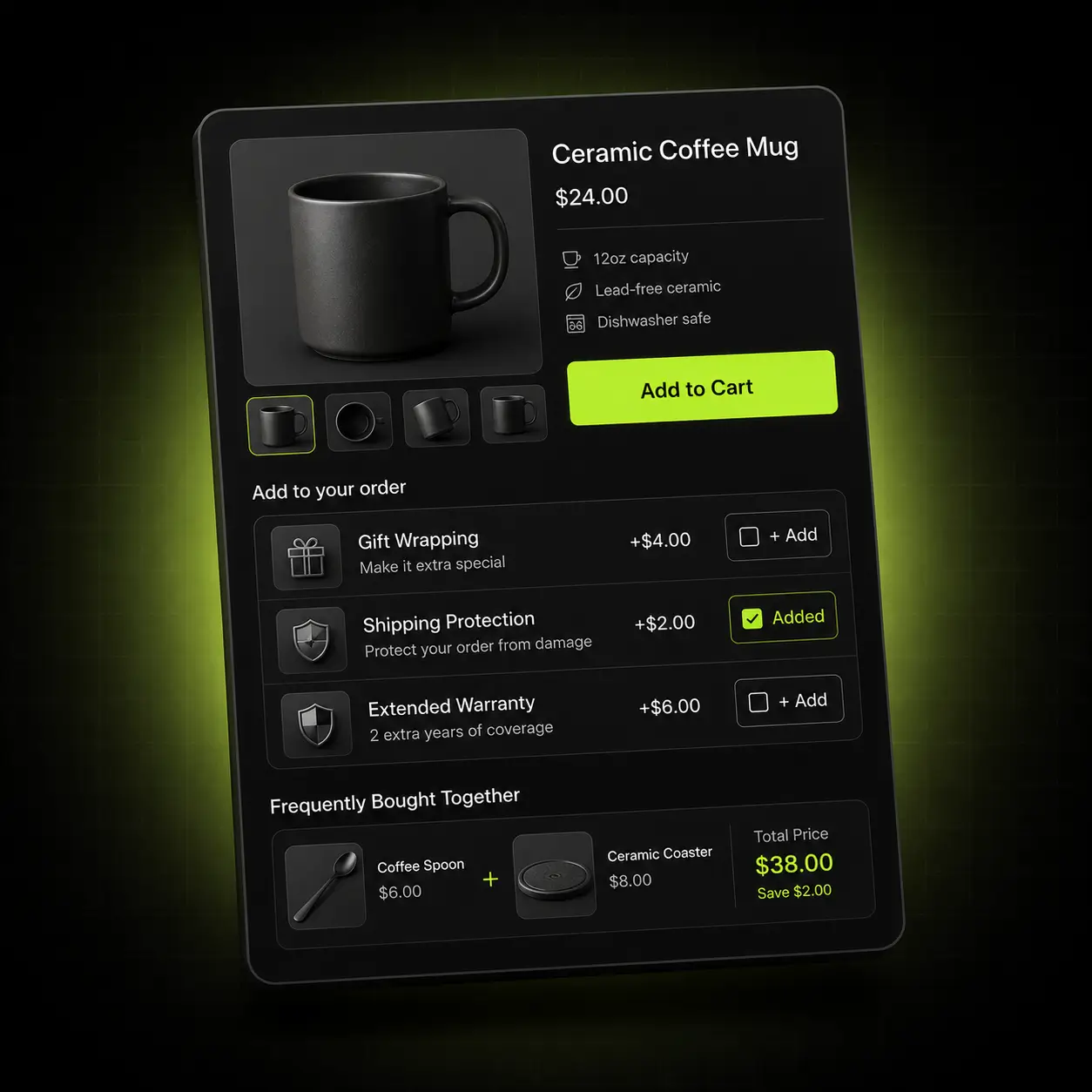
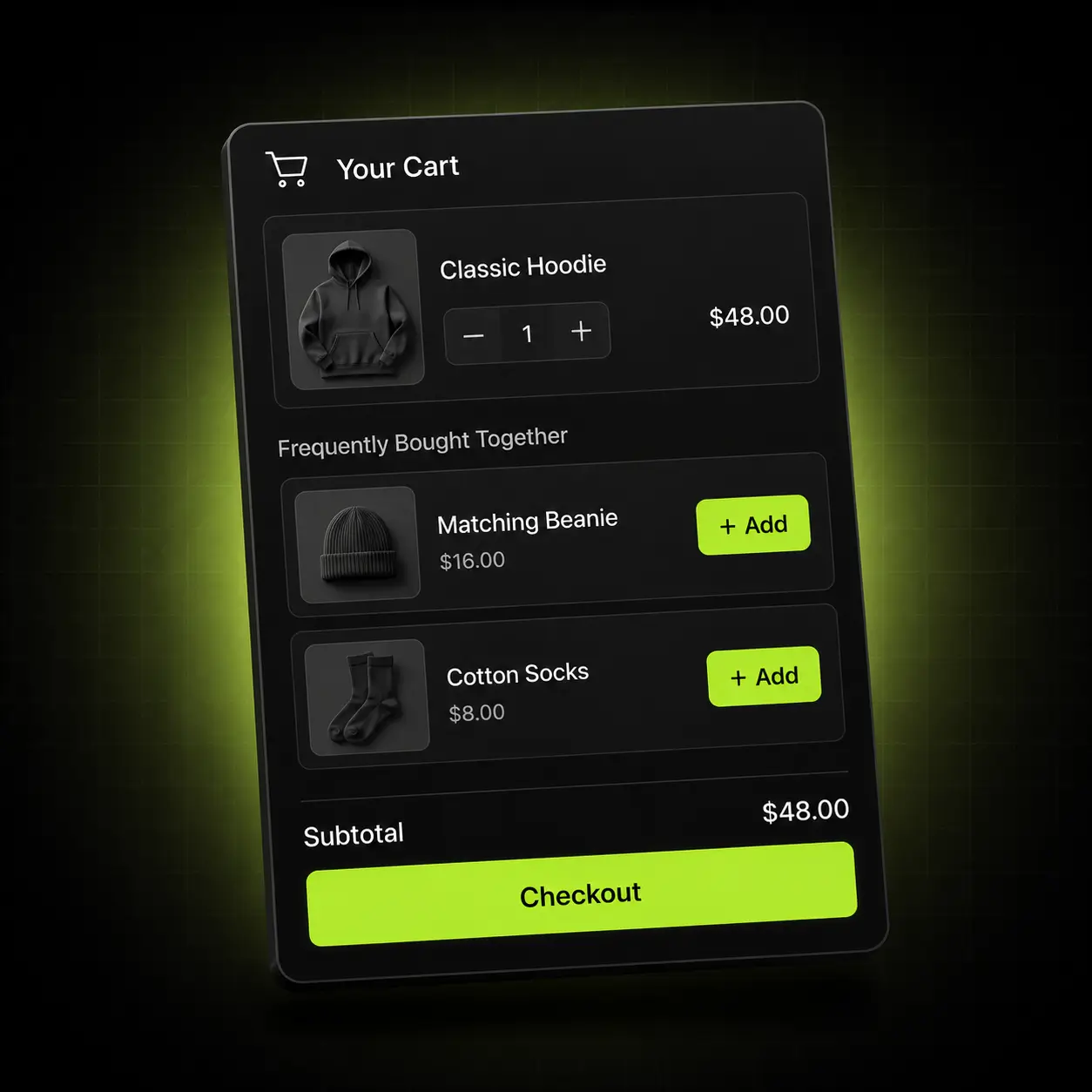
An offer that only exists on the product page misses everyone who arrived through search or a collection. These are the four places bundling earns.
The quantity ladder and the BYOB builder.
Mix-and-match offers across the whole collection.
The discount applied and shown as a saving before checkout.
Automatic discounts, with no code and no collisions.

The right mechanic depends on whether your products are interchangeable, complementary or consumable. Here is where we’d point you first.
Predictable repurchase and multi-month buying.
Start with: A quantity ladder on multi-month packs — buy 3 save 15% is the standard opener.
Strong set logic and high gifting intent.
Start with: A Build Your Own Box at a fixed price, plus a curated fixed-price set alongside it.
Complementary items rather than repeat units.
Start with: Mix-and-match across a collection, with BOGO on the categories you need to move.
Bundle apps are where free tiers end fastest — usually capped at one or two bundles, with BYOB and analytics behind the highest plan.
| Capability | Typical bundles app | Oxify |
|---|---|---|
| Quantity breaks | Free tier caps at 1–2 bundles | Unlimited, free |
| Build Your Own Box | Almost always the top tier | Included, free |
| BOGO / Buy X Get Y | Usually paid | Included, free |
| Free-gift bundles | Separate app | Included, free |
| Mix-and-match across collections | Often paid | Included, free |
| Fixed-price sets | Often paid | Included, free |
| Automatic discounts (no codes) | Varies | Yes, via Shopify’s engine |
| A/B testing | Top tier only | Included, free |
| Revenue analytics per bundle | Top tier only | Included, free |
| Bundle or order cap | Common on free tiers | None |
| Price | Free tier, then $15–$60/mo | Free |
Comparison reflects the common free-versus-paid split across popular bundle apps on the Shopify App Store. Competitor features and pricing change — re-check before quoting this.
No developer, no theme edits, no discount codes to distribute.
Add the app from the Shopify App Store. It connects through an app embed block — no theme files touched.
Quantity breaks, BYOB, BOGO, free gift or a fixed-price set.
Choose the products or collection, set the tiers, and write what the shopper sees.
Go live, then A/B a second offer against it and keep the one that earns.
Build Your Own Box, A/B testing and revenue analytics are normally top-tier features. All three are included here at no cost.
No trial to expire, no credit card, no usage cap and no “upgrade to unlock” on any feature listed here.
Install freeWhen you want to raise average order value rather than just fix one surface, our paid app covers the product page, the cart, the sticky cart and post-purchase from one install — from $9.99/month with a 30-day ROI guarantee.
See Cart Drawer & UpsellsBuilt for Shopify is Shopify’s own quality standard — it covers performance, app-embed compliance and admin UX, and it has to be earned.
8 reviews on the Shopify App Store
✓ Built for Shopify
Built for Shopify sets a performance bar the app has to meet, not just claim.
Integrates with Checkout, Shopify Admin, Recharge, PageFly, GemPages, EComposer and Kaching.
1,000+ stores run one or more Oxify apps, sharing the same support team.
Bundling raises the basket on the product page. These apps carry it through to checkout.
Our paid app — free gift tiers and in-cart cross-sells that stack with your bundle pricing rather than fighting it.
Also free. A deadline that makes the bundle worth taking today.
Also free. Puts the bundle offer above every page on the store.
Free, every feature, about ten minutes to set up. No trial to expire and nothing to cancel.
It lets you sell products together at a different price than they cost individually — quantity breaks, fixed-price sets, mix-and-match, BOGO, or a build-your-own box. The discount applies automatically rather than through a code.
Quantity breaks. They are the least work to set up, they apply to your existing catalogue without any curation, and they lift the most reliably. Add BYOB or fixed sets once you know which products people buy together.
No, and this matters. Bundles are applied as pricing rules over your existing products, so there are no duplicate SKUs and no second inventory to keep in sync.
No. Bundles apply through Shopify’s native automatic-discount engine rather than a parallel system, so your campaign codes keep working alongside them.
The customer picks their own combination from a collection — “any 6 for $45” — rather than accepting a set you curated. It converts better than a fixed set because nobody has to take an item they don’t want.
Yes, with minimum and maximum counts, and a live progress indicator as the customer builds it.
Yes. A/B testing is included, and revenue is attributed per bundle rather than by clicks, so you can see which one actually earned.
Yes — it integrates with Recharge among others, so bundle pricing can apply to subscription products as well as one-time purchases.
On the product page as the ladder or box progress, in the cart as an applied saving, and at checkout as an automatic discount.
No. There is no code to paste and no Liquid to edit — the app installs as an app embed block and everything after that is a visual editor.
Yes. It runs on Online Store 2.0 themes including Dawn, Horizon, Impulse, Prestige, Motion and Warehouse, and on most older themes too.
No. It is a small CDN-delivered script that loads asynchronously and does not block rendering or your buy button.
Everything is removed cleanly. Because it installs as an app embed block rather than editing theme files, there is no orphaned Liquid left behind to clean up.
The app requests only the Shopify scopes it needs to function. We do not sell data, and everything is deleted on uninstall in line with Shopify’s data-retention requirements.
Free. Every feature described on this page is included at no cost, with no usage cap and no paid tier hiding behind it. We also build a paid cart-drawer app, and free apps are how most merchants find us — but you are never required to install it.